

Quick Answer
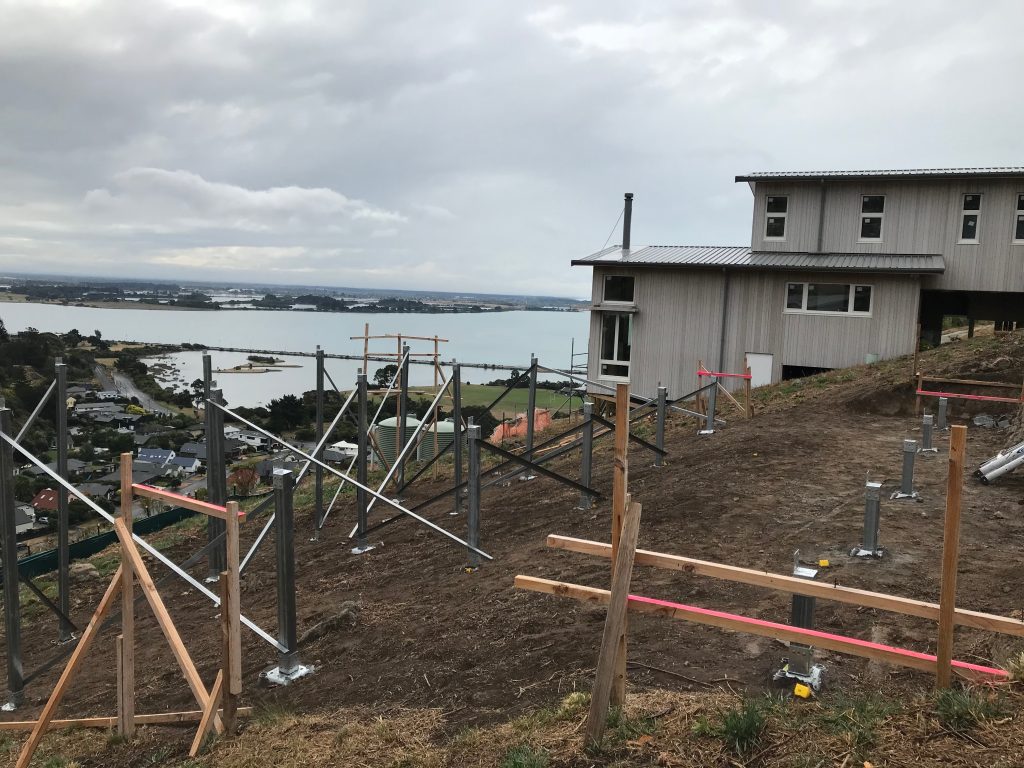
For sloped, coastal, sandy or difficult-access sites in New Zealand, the best foundation is usually one that minimises excavation, avoids heavy machinery where possible, suits variable ground conditions and allows work to continue quickly. Concrete piles can work but may be difficult where access, excavation or weather is an issue. Screw piles can be useful but generally need machinery. EcoPile is designed for NZ conditions and can be installed without heavy machinery, making it a practical option for many difficult sites.
Why Difficult Sites Need a Different Foundation Conversation
Not every site is a flat, open, easy-access section.
Many New Zealand builds happen on:
- Sloping land
- Coastal sections
- Sandy soils
- Clay banks
- Tight urban sites
- Back sections
- Landscaped properties
- Remote or rural locations
- Sites with limited vehicle access
On these sites, the foundation decision can have a major impact on cost, build speed and site disruption.
A foundation method that works perfectly on a flat suburban section may become expensive or impractical when a concrete truck cannot get close, an excavator cannot access the work area, spoil has nowhere to go, or wet weather keeps delaying concrete.
The Main Foundation Challenges on Difficult Sites
Access
If machinery cannot reach the pile locations, both concrete and screw pile installation can become harder. Concrete may need pumping or manual handling. Screw piles may need compact machinery or specialist equipment.
EcoPile’s existing installation guidance states the system can be installed without heavy machinery and can be driven using tools such as an overhead post driver, jackhammer and SDS Max drill for harder ground conditions.
Ground Conditions
New Zealand ground can change dramatically from one region to another.
EcoPile states the system is designed for local conditions and can be used across a wide range of ground types, including soft coastal sand, clay, fine gravels and rock, subject to specification and preparation.
Site Disturbance
Traditional foundations often require excavation. That can mean spoil removal, damage to lawns or landscaping, erosion risk on slopes and more reinstatement work after installation.
A driven concrete-free system can reduce disturbance because it displaces soil rather than removing large amounts of it.
Weather
Concrete work can be slowed by rain, site moisture and curing requirements. Concrete-free systems avoid concrete cure time, which can help projects keep moving.
Option 1: Concrete Piles on Difficult Sites
Concrete piles can be suitable for difficult sites, but they often come with practical challenges.
On sloped or tight sites, concrete piles may require hand excavation, complex access planning, concrete pumping, spoil removal and careful inspection timing. If the site is wet or unstable, the process can become slower.
Concrete may be suitable when:
- Access is manageable
- The design already specifies concrete
- Excavation is simple
- Soil conditions are stable
- Programme delays are not a major concern
Concrete may be less suitable when:
- Machinery access is limited
- Spoil removal is difficult
- The site is steep or landscaped
- Weather disruption is likely
- The build needs to move quickly
Option 2: Screw Piles on Difficult Sites
Screw piles are often used where concrete is not ideal. They can be faster than concrete and reduce wet trades on site.
However, screw piles usually need an installation machine. On a tight, steep, landscaped or back-section site, machinery access can still be a problem.
Screw piles may be suitable when:
- Machinery access is available
- Ground conditions suit the screw pile design
- A specialist installer is available
- The project needs a concrete-free option
Screw piles may be less suitable when:
- The site cannot take machinery
- Access is narrow or steep
- The ground is very hard
- The project needs simple builder-led installation
Option 3: EcoPile on Difficult Sites
EcoPile is especially relevant for difficult sites because it removes several common constraints at once.
The system is concrete-free, requires no excavation, can be installed without heavy machinery and is instantly load-bearing once installed. EcoPile’s current website also positions the system as suitable for conditions from soft sand to hard rock, with technical support available for installers.
That makes it a strong fit for:
- Coastal properties
- Sloped sections
- Tight urban sites
- Back gardens
- Sleepouts and cabins
- Decks
- Retaining walls
- Remote sites
- Sites with existing landscaping
Best Foundation for Sloped Sites
On sloped sites, excavation can be expensive and disruptive. Concrete foundations may require deeper holes, retaining, spoil removal and extra labour. Screw piles may work if machinery can safely access the site.
EcoPile is often well suited because it can be installed using hand tools and does not require concrete or excavation. That can reduce the need to disturb the slope and help preserve the existing ground profile.
Best Foundation for Coastal Sites
Coastal sites often come with sand, salt air, wind exposure and restricted access.
EcoPile states that it is engineered to withstand harsh coastal and island conditions, using NZ-grown timber and hot-dip galvanised Australian steel.
For coastal builds, the ability to avoid large concrete works and reduce ground disturbance can be a major advantage, especially where access is limited or the site is environmentally sensitive.
Best Foundation for Sandy Soil
Sandy soils can make traditional excavation difficult because holes may collapse or require additional preparation. A driven system can be useful because it engages the ground without removing large volumes of material.
EcoPile’s technical content states the system can be used in soft coastal sand and other variable ground conditions, subject to correct design and specification.
Best Foundation for Tight-Access Sites
For tight-access projects, the biggest issue is often not the pile itself. It is getting trucks, pumps, augers or excavators to the right location.
EcoPile is designed to be installed without heavy machinery, which can make it practical for:
- Back sections
- Narrow paths
- Finished landscaping
- Urban infill
- Properties with limited driveway access
- Sites where heavy machinery would create damage
What Should Builders Check Before Choosing?
Before choosing a foundation system for a difficult site, check:
- Soil type
Sand, clay, fill, gravel and rock all behave differently. - Access
Can machinery reach the pile locations safely? - Load requirements
What does the structure need to support? - Council and engineering pathway
What documentation, design or Producer Statements are required? - Weather exposure
Will concrete work create unnecessary programme risk? - Site reinstatement
How much landscaping or ground repair will be needed after installation?
FAQs
What is the best foundation for a sloped section in NZ?
For many sloped sites, a low-disturbance pile system is preferable because it reduces excavation and avoids unnecessary ground disruption. EcoPile can be a strong option where the site suits a driven concrete-free foundation.
Can EcoPile be used in sand?
EcoPile states that its system can be used in soft coastal sand and other variable NZ ground conditions, subject to correct specification and installation.
What foundation is best for difficult access?
A foundation system that avoids heavy machinery is usually best for difficult-access sites. EcoPile can be installed without heavy machinery, making it suitable for many back-section, tight-access and landscaped sites.
Do difficult sites need an engineer?
Often, yes. Any foundation system must be matched to the ground conditions, loads and compliance pathway. Always confirm requirements with your designer, engineer, LBP or council.
CTA
Building on a sloped, coastal, sandy or hard-to-access site? Contact EcoPile for technical advice on a concrete-free foundation system designed for New Zealand conditions.