

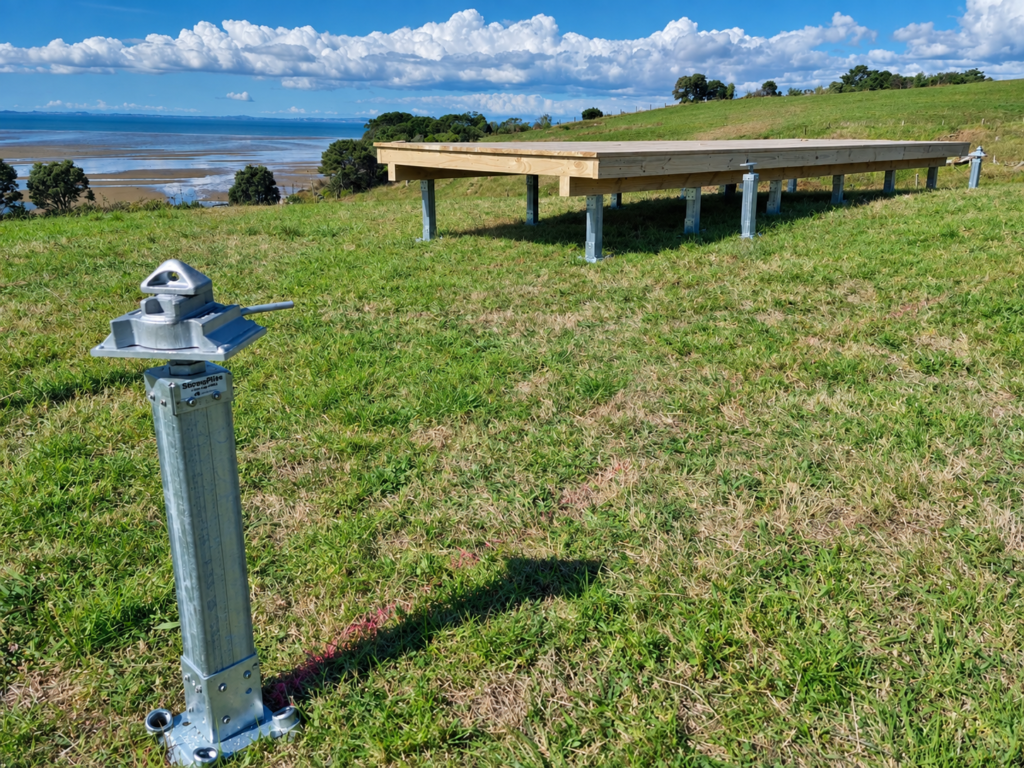
The cost of pile foundations in New Zealand depends on more than the pile price, here we will discuss the hidden costs. Builders and homeowners should compare the full installed cost, including labour, machinery, excavation, concrete, inspections, delays, access, weather risk and site reinstatement. Concrete piles may look familiar but can carry hidden costs. Screw piles can reduce concrete work but often require specialist machinery. EcoPile can reduce cost drivers by removing concrete, excavation, heavy machinery and cure time.
Why “Cost Per Pile” Can Be Misleading
When comparing foundation options, it is tempting to ask one question:
“How much does each pile cost?”
But that is not the best way to compare foundations.
The real question is:
“What is the total installed cost of getting the foundation ready to build on?”
That includes every step required to go from bare ground to a load-ready foundation.
A cheaper product can become more expensive once installation, machinery, delays and reinstatement are included. A slightly higher product cost can sometimes reduce the total project cost if it removes multiple trades, equipment, waiting time or access issues.
The Real Cost Categories to Compare
1. Materials
This includes the pile, footing, post connection, bracing components and any concrete, reinforcing, fixings or accessories required.
Concrete piles may require timber, reinforcing and concrete. Screw piles require the pile system and connections. EcoPile uses a steel pile and post footing system designed to connect with timber posts.
2. Labour
Labour can be one of the biggest variables.
Concrete piles may require excavation, preparation, pouring and finishing. Screw piles usually require a specialist installer or operator. EcoPile is designed for builder-friendly installation without specialist heavy machinery, with two-person installation suitable for many projects.
3. Machinery
Machinery costs can include:
- Excavator hire
- Auger hire
- Screw pile installation equipment
- Concrete pump
- Truck access
- Transport
- Operator time
EcoPile’s website positions the system as installable without heavy machinery, which can remove a major cost category on many sites.
4. Excavation and Spoil Removal
Concrete foundations often require digging. Once ground is removed, it needs to go somewhere.
Spoil may need to be stockpiled, moved, loaded, transported or disposed of. On tight sites, that can become expensive.
Concrete-free driven systems reduce this because they do not require large holes or spoil removal.
5. Inspections and Programme Delays
Concrete foundations may require pre-pour inspections depending on the project and council requirements. Scheduling delays can slow the build before the concrete is even poured.
EcoPile’s current installation FAQ notes that because there is no concrete, there is no pre-pour inspection in the same way as conventional concrete foundations, although project-specific building consent and inspection requirements should always be confirmed with the relevant building consent authority.
6. Cure Time
Concrete takes time before the next stage can continue. That can create programme delay, especially when weather, trades and inspections are not aligned.
EcoPile is instantly load-bearing once installed, allowing work to continue without waiting for concrete to cure.
7. Site Reinstatement
Machinery and excavation can damage lawns, gardens, paths, accessways and finished landscaping.
This cost is easy to overlook at quoting stage but real at the end of the job.
For sites where landscaping is already complete, a no-dig, no-heavy-machinery system can protect the surrounding area and reduce reinstatement work.
Cost Comparison: What to Include
| Cost Factor | Concrete Piles | Screw Piles | EcoPile |
| Pile or footing material | Yes | Yes | Yes |
| Concrete | Yes | No | No |
| Excavation | Usually | Minimal | No |
| Spoil removal | Often | Minimal | No |
| Heavy machinery | Often | Usually | No |
| Specialist installer | Sometimes | Usually | Optional depending on project |
| Pre-pour inspection | Often | No | No concrete pre-pour |
| Cure time | Yes | No | No |
| Site reinstatement | Often | Sometimes | Minimal |
| Weather delay risk | Higher | Lower | Lower |
When Concrete Piles May Cost More Than Expected
Concrete piles can become more expensive when:
- The site is sloped
- Access is difficult
- Spoil removal is required
- A concrete pump is needed
- Weather delays the pour
- Inspections hold up the programme
- Landscaping needs repair
- The job is small and setup costs are proportionally high
For larger, flat, easy-access sites, concrete may still be cost-effective. But for smaller residential projects, sleepouts, decks, retaining walls and difficult sites, the hidden costs can outweigh the familiar material cost.
When Screw Piles May Cost More Than Expected
Screw piles can become more expensive when:
- Specialist equipment must be brought to site
- Access is limited
- The job is small but still requires an installer
- Hard ground slows installation
- Scheduling depends on contractor availability
- Machinery causes reinstatement work
Screw piles can be a good option, but the full cost should include the installation crew, equipment and access requirements.
Where EcoPile Can Reduce Cost Drivers
EcoPile can reduce the total installed cost by removing or reducing several cost categories:
- No concrete
- No excavation
- No spoil removal
- No concrete pump
- No heavy machinery
- No cure time
- Less site reinstatement
- Faster installation
- Builder-friendly process
- Technical support available
The result is not just a different pile cost. It is a simpler foundation process.
Why Speed Has a Cost Value
Every day a project sits waiting has a cost.
Delays can affect:
- Labour scheduling
- Subcontractor sequencing
- Equipment hire
- Weather exposure
- Client confidence
- Cashflow
- Build programme certainty
A foundation system that allows work to continue the same day can create value beyond the line item price.
How to Compare Quotes Properly
When comparing foundation quotes, ask each supplier or contractor:
- Is the quote supply-only or supply and install?
- Does it include machinery?
- Does it include concrete?
- Does it include excavation?
- Does it include spoil removal?
- Does it include engineering or Producer Statements?
- Does it include bracing or connections?
- Does it include site reinstatement?
- How soon can work continue after installation?
- What happens if the ground is harder or softer than expected?
Only once those answers are clear can you compare like-for-like.
Want a clearer comparison for your project? Contact EcoPile with your site details and foundation requirements, and the team can help you compare the real installed cost of concrete, screw piles and EcoPile.
FAQs
What is the cheapest pile foundation in NZ?
The cheapest option depends on the site. On a flat, easy-access site, concrete may be competitive. On tight, sloped, landscaped or difficult-access sites, a concrete-free system like EcoPile can reduce hidden costs such as machinery, excavation, cure time and reinstatement.
Are screw piles cheaper than concrete piles?
Sometimes. Screw piles can reduce concrete work, but they usually require specialist machinery and installation. The full installed cost should be compared, not just the product price.
Is EcoPile cheaper than concrete?
EcoPile can be more cost-effective when the project benefits from no excavation, no concrete, no heavy machinery, no cure time and reduced site disruption. The best way to compare is to look at the total installed foundation cost.
Why does foundation cost vary so much?
Foundation cost varies because soil conditions, access, structural loads, machinery requirements, engineering, council requirements and site reinstatement can all change the final price.