

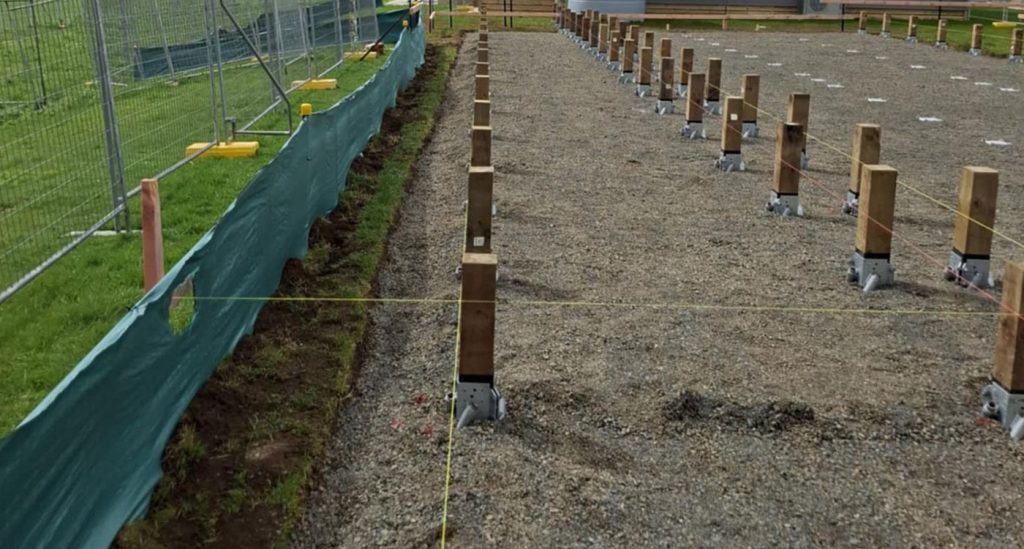
This post answers the most common questions about installing EcoPile concrete-free foundations. It covers what ground conditions EcoPile works in, what tools you need, whether you can self-install or need a licensed tradesperson, and how the system stacks up against council inspection requirements. You’ll also find guidance on load capacity, NZS 3604 compliance, and what to expect on site so you can plan your foundation install with confidence before you order!
Planning your foundations shouldn’t feel harder than building the house on top of them. EcoPile – designed and patented right here in New Zealand – has changed the way Kiwi builders, DIYers, and contractors approach piling. No concrete. No heavy machinery. No waiting around.
But questions still come up, especially from first-timers. Here are the most common EcoPile installation questions we hear – answered plainly, so you can get on with the build!
1. What Exactly Is EcoPile, And How Does It Work?
EcoPile is a concrete-free residential and light commercial foundation system engineered specifically for New Zealand’s variable ground conditions. It clamps onto any 125×125 timber post and instantly creates a compliant footing with a bearing capacity of up to 40kN (the equivalent of a standard NZS 3604 footing).
The engineering logic mirrors the root system of a tree: a combination of shallow and deep foundation principles that transfers load through skin friction, toe resistance, and bearing capacity simultaneously. Four micro-piles are driven directly into the ground at a proprietary angle, working together to resist compression, uplift, lateral loads, and bending moments. No concrete required, no waiting for anything to cure.
2. What Ground Conditions Can EcoPile Handle?
This is one of the most common questions and the answer is one of EcoPile’s greatest strengths. The system works in everything from soft coastal sand to steep clay banks, compacted fill, fine gravel, and even sedimentary rock.
For standard soil conditions, you can begin with a simple overhead post driver (available from Bunnings, ITM, or PlaceMakers) to start the pile, then switch to a 50-joule jackhammer to drive it to depth. For harder ground (alluvial river gravel, basalt, or granite) a pre-drilled pilot hole using an SDS Max drill makes the process straightforward. The team at EcoPile can advise on which approach suits your specific site conditions before you order.
3. Can I Install EcoPile Myself, Or Do I Need A Licensed Installer?
You do not need a specialist tradesperson to install EcoPile. Unlike screw piles, which typically require a licensed operator and dedicated machinery, EcoPile is specifically designed for builder self-installation. One person holds the pile plumb, one person drives – that’s the full crew requirement for most installs.
EcoPile arrives on site pre-assembled. You set your string lines, position the pile on your mark, and drive it in. Each post takes under five minutes to install, and it’s instant load-bearing the moment it’s seated, no dry times, no delays, no waiting on other contractors to clear the site before you can continue.
EcoPile also operates professional installation teams dispatching from Auckland, Wellington, Christchurch, and Suva (Fiji) if you’d prefer a fully managed service.
4. What Tools Do I Need To Install EcoPile?
The good news: nothing too difficult! Here’s a practical tool list:
- Overhead Post Driver: Start with this. It’s cheap, lightweight, and gets the pile going without breaking your back. Available at most building supply stores.
- 50-Joule Jackhammer: The core installation tool for standard conditions. Any 50J unit will work.
- Hilti TE3000: For tough conditions like hard rock or dense alluvial gravel, this is the jackhammer EcoPile recommends. It has the highest hitting power available for this type of work.
- SDS Max Drill: Used to pre-drill in the most challenging ground before driving the micro-piles.
- Post Level: A cheap clip-on level (bungee-mounted to the post) keeps your pile plumb while driving. Simple, effective.
- Impact Driver And Tech Screws: Used to lock the system down once the micro-piles are seated.
Always wear sturdy gloves (the steel can develop sharp edges during driving), safety goggles, and quality earmuffs. Jackhammers are loud – hearing protection is not optional!
5. Does EcoPile Comply With The NZ Building Code?
Yes. EcoPile is a recognised, compliant alternative to traditional concrete or screw pile foundations for residential construction. The system meets both NZS 3604 (the standard for light timber-framed buildings) and engineered design pathways for more complex or heavily loaded structures. For any project requiring building consent, pile length and specification will need to be confirmed by a structural engineer prior to installation which is standard practice for any foundation system.
6. Do I Still Need Council Inspections During Installation?
This is a genuine time-saver that often surprises people. With conventional concrete foundations, councils require a pre-pour inspection (the inspector must physically visit site before concrete is placed). With EcoPile, there’s no concrete, so there are no pre-pour inspections to schedule or wait for.
This can meaningfully compress your build schedule as you are not at the mercy of inspection availability or bad-weather delays. Once your piles are in and your engineer (where required) is satisfied, you can move on quite rapidly.
Note: Building consent requirements vary by project scope and local council. Always confirm with your building consent authority what inspections are required for your specific project.
7. What Load Capacity Does EcoPile Achieve?
The standard EcoPile footing achieves a bearing capacity of 40kN per pile, equivalent to a compliant NZS 3604 footing. For higher load requirements, the EcoPile High Capacity Anchor system can achieve capacities up to 50 tonnes, making it suitable for commercial applications and more heavily loaded structures.
The system handles compression loads, uplift forces, lateral loads, and bending moments, or in other words the full range of forces a foundation encounters in real-world conditions, including seismic events. This multi-directional load resistance is a direct result of the multi-angle micro-pile arrangement and the skin friction generated along the pile shaft.
8. Can EcoPile Be Used For More Than Just House Piles?
Absolutely. EcoPile is a versatile foundation system suited to a wide range of applications, including:
- Residential homes: full foundation systems for new builds and re-piling
- Decks: fast, no-concrete footings that install in minutes per post
- Fences: particularly useful on challenging ground where post driving is difficult
- Steps And Retaining Walls: for low retaining walls and stepped access
- Outbuildings, Sleepouts, and Minor Structures
9. How Does EcoPile Compare To Screw Piles?
Both are concrete-free alternatives to traditional poured foundations, but there are meaningful practical differences:
| EcoPile | Screw Piles | |
| Self-install | ✅ Yes | ❌ Usually no — requires licensed operator |
| Heavy machinery | ❌ None required | ✅ Often required |
| Install time per pile | Under 5 minutes | Varies — typically longer |
| Pre-pour inspection | ❌ Not applicable | ❌ Not applicable |
| Ground conditions | Soft sand to hard rock | Variable — some limitations in hard ground |
| Carbon footprint | Lower | Moderate |
| Reusable / recyclable | ✅ 100% | Partial |
For builders who want to control their own programme, keep machinery off-site, and reduce cost, EcoPile is frequently the stronger choice.
10. Is EcoPile Really Environmentally Better?
Yes, and not just in marketing terms. EcoPile is 100% reusable and 100% recyclable. The steel is sourced from Australia and hot-dip galvanised for longevity. The NZ timber used in the system is sustainably grown and kiln-dried.
Compared to concrete piles, EcoPile eliminates the carbon cost of cement production, concrete truck deliveries, pump trucks, and on-site washout. Compared to screw piles, it removes the need for heavy plant machinery with its associated transport emissions and site disturbance.
The system also doesn’t disturb the soil profile the way augured or drilled piles do – the micro-piles displace rather than remove material, which reduces site disruption and erosion risk on sloped or sensitive sites.
11. What If I Hit A Problem During Installation?
EcoPile offers technical installation support by phone from anywhere in New Zealand or anywhere in the world. If you hit a situation you’re not sure about mid-install, you can call the team and work through it in real time. They’ve seen every ground condition New Zealand can throw at a foundation, and the support is genuinely technical – not just a call centre.
12. Where Can I Get EcoPile, And How Do I Start?
EcoPile is available directly through their website online or by calling 09 947 5034. The team will help you specify the right pile length and configuration for your ground conditions and structural requirements before you order, not after.
Whether you’re a builder managing a full residential project, a contractor doing commercial foundations, or a motivated owner-builder tackling a deck or sleepout, EcoPile is designed to work for you. Supply-only, or supply-and-install, the choice is yours.
EcoPile is a New Zealand family-owned business, founded in 2018. They are the inventors and patent holders of EcoPile globally, and the only licensed stockists of the Surefoot foundation system in the South Pacific. Installation teams operate from Auckland, Wellington, Christchurch, and Suva. EcoPile. No concrete. No waiting. Just foundations that work!