 6 min read
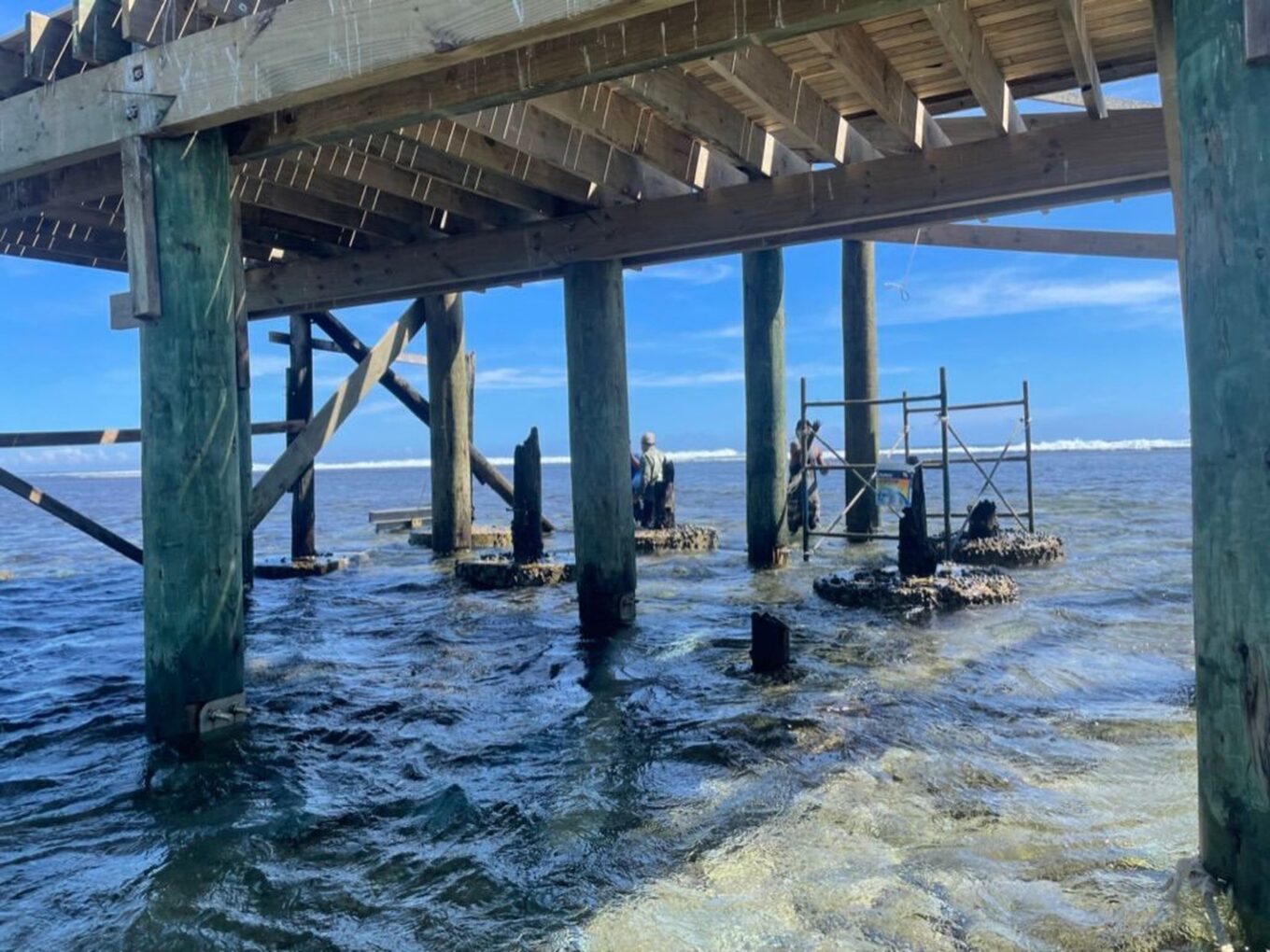
Building foundations near water presents challenges that don’t typically exist on residential building sites. EcoPile offers an environmentally friendly, engineered, concrete-free marine foundation system designed to simplify installation while minimising disturbance to the surrounding site.
Soft ground, tidal movement, corrosion exposure and restricted access can make conventional foundation installation difficult, time-consuming and expensive.
For jetties, boardwalks, waterfront walkways and other coastal structures, choosing an appropriate piling system is essential for long-term performance.
What Makes Marine Foundations Different?
Marine and coastal structures are exposed to demanding environmental conditions.
Unlike foundations on stable, dry land, marine piles may need to withstand:
- Soft or saturated soils: Coastal sand, estuarine mud and variable ground conditions.
- Wave and tidal action: Repeated forces acting on the foundation.
- Corrosion exposure: Saltwater and coastal environments can accelerate deterioration of unsuitable materials.
- Lateral and uplift loads: Forces that can act from different directions.
- Difficult access: Shorelines and waterfront locations where heavy equipment may be impractical.
These factors make geotechnical assessment, appropriate engineering and material selection particularly important.
What Foundation Options Are Available for Jetties and Boardwalks?
Several piling systems can be used for marine and coastal structures, depending on the site conditions and engineering requirements.
Concrete Piles and Footings
Concrete foundations are commonly used in marine construction and can provide substantial load-bearing capacity.
However, installation may require excavation, formwork, concrete delivery and specialist equipment.
Working around water can also introduce additional challenges with access, tidal conditions and environmental controls.
EcoPile Concrete-Free Marine Foundations
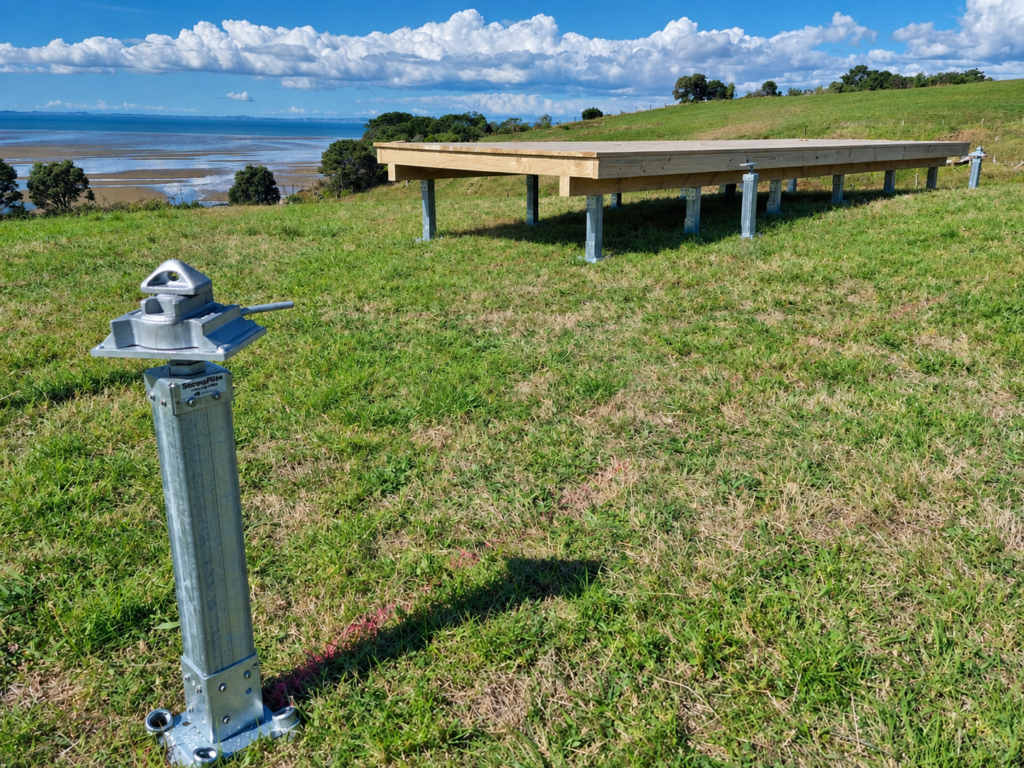
EcoPile uses a patented, kiwi designed multi-directional steel micropiles driven into the ground to create an engineered foundation.
The angled pile arrangement is designed to resist compression, uplift, lateral forces and bending moments.
Unlike concrete piling methods, EcoPile does not require poured concrete or curing time.
On suitable sites, installation can be completed using portable, hand-held equipment, providing a practical option for waterfront locations with restricted access.
Learn more about EcoPile marine foundations.
Where Can EcoPile Marine Foundations Be Used?
EcoPile offers foundation solutions for a range of marine and coastal applications.
1. Jetties and Waterfront Platforms
Jetties and waterfront platforms require foundations that can support structural loads while resisting environmental forces.
EcoPile can provide an alternative to conventional concrete footings on suitable projects, particularly where access is restricted or excavation would be difficult.
2. Boardwalks and Coastal Walkways
Boardwalks are frequently constructed across sensitive or difficult terrain, including wetlands, coastal margins and uneven ground.
EcoPile’s minimal-excavation installation method can help reduce ground disturbance and avoid the need to move heavy equipment along the proposed walkway.
This can be especially useful where preserving the surrounding landscape is a priority.
3. Boat Ramps and Waterfront Access Structures
Boat ramps and associated access structures must account for ground conditions, water exposure and the loads imposed by their intended use.
Engineered EcoPile foundations may be suitable for supporting elements of these structures, subject to the loads and site-specific design requirements.
4. Other Coastal Structures
EcoPile may also be considered for suitable waterfront platforms, access structures and other engineered coastal projects.
The correct footing specification depends on structural loads, soil conditions, corrosion exposure and applicable regulatory requirements.
Why Choose Concrete-Free Foundations for Coastal Projects?
A concrete-free foundation system can offer several practical advantages in marine environments.
No concrete pouring or curing: EcoPile removes the need to transport, pour and cure concrete for the footing system.
Portable installation equipment: Hand-held equipment can make installation easier where excavators, pump trucks or large piling rigs cannot reach.
Reduced ground disturbance: Minimal excavation helps limit spoil removal and disruption to the surrounding site.
Immediate load-bearing capacity: Once correctly installed and verified, EcoPile footings can take their designed loads without waiting for concrete to cure.
Engineered multi-directional support: Angled micropiles provide resistance to compression, uplift, lateral forces and bending moments.
These benefits ensure a low impact approach that simplifies construction logistics, particularly on remote, restricted-access or environmentally sensitive sites.
What About Corrosion and Long-Term Performance?
Corrosion protection is an important consideration for any steel foundation installed in a coastal or marine environment.
The required protection depends on factors such as saltwater exposure, whether components are submerged or exposed to splashing, soil conditions and the intended design life.
Marine foundation designs must use appropriately specified materials and corrosion protection for the actual exposure conditions.
EcoPile’s technical team can assist with assessing project requirements and identifying suitable foundation specifications.
Are Marine Piling Consents Required in New Zealand?
Marine and coastal construction can require additional planning and regulatory approvals.
Depending on the location and scope of the project, requirements may involve building consent, resource consent, coastal permits or other authorisations.
Work within the coastal marine area or near sensitive waterways can be subject to regional planning rules and environmental restrictions.
Project owners should confirm the applicable requirements with the relevant council and obtain professional advice before commencing construction.
A Practical Foundation Alternative for Marine Projects
Marine foundation installation doesn’t always need to involve extensive excavation, heavy machinery and concrete pouring.
EcoPile provides a concrete-free alternative for suitable jetties, boardwalks, waterfront platforms and other coastal applications.
With portable installation equipment, engineered multi-directional support and no curing delays, EcoPile can make challenging foundation projects easier to deliver.
Planning a marine or coastal project?
Contact the EcoPile team to discuss your application, site conditions and engineering requirements.
FAQs:
What type of foundations are used for jetties in NZ?
Jetties can use concrete piles, timber piles, steel piles or engineered micropile systems. The appropriate solution depends on water conditions, structural loads, soil characteristics, exposure and regulatory requirements.
Can EcoPile be used for boardwalk foundations?
Yes. EcoPile offers concrete-free foundation solutions that may be suitable for boardwalks and waterfront walkways. The design must account for site conditions and structural loading requirements.
Can marine piles be installed without heavy machinery?
Some marine piling systems, including EcoPile, can be installed using portable equipment on suitable sites. Installation methods depend on ground conditions, pile specifications and site access.
How are steel marine piles protected against corrosion?
Steel marine piles require corrosion protection appropriate to their environment and design life. This may involve protective coatings, galvanising, corrosion allowances or other engineered measures.
Are concrete-free foundations suitable for coastal environments?
Yes, where the system has been appropriately engineered for the location. Ground conditions, corrosion exposure, wave forces and structural loads must be considered before selecting a foundation system.
Do I need consent to build a jetty in NZ?
Consent requirements depend on the location, type and scale of the structure. Building consent, resource consent or coastal permits may be required. Check with the relevant local and regional councils before starting work.