

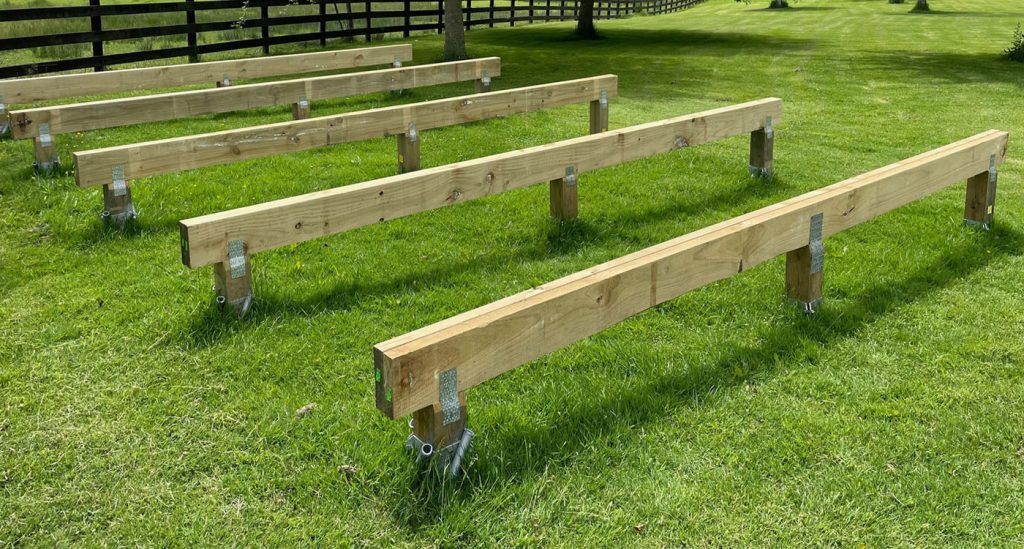
EcoPile is a concrete-free residential foundation system that mimics the root structure of a tree, using hybrid anchoring to engage both shallow and deep soil layers simultaneously. High-strength steel micropiles are driven into the ground at specific angles, creating a rigid triangular frame that resists compression, uplift, and lateral forces without relying on the mass of concrete. The result is a foundation that is instantly load-bearing, causes minimal soil disturbance, and outperforms concrete in reactive or expansive soils common across New Zealand. EcoPile foundations are permitted under the NZ Building Code via Specific Engineering Design (SED) or a Producer Statement, and are fully compliant with B1/VM1 and B1/VM2 structural verification methods.
In the world of New Zealand residential construction, foundations have long been synonymous with one thing – concrete. We dig deep holes, wait for inspections, pour tonnes of wet cement, and then wait, often for days, for it to cure. But as building sites become more challenging and environmental standards more stringent, the industry is looking back to nature for a better way to stay grounded.
That’s where EcoPile comes in. At EcoPile, we often describe the EcoPile system as a “tree root” foundation. While that may sound a little poetic, it is actually based on sophisticated geotechnical engineering. By mimicking the way a tree anchors itself into diverse soil types, EcoPiles provide a level of stability that other alternative methods like screw piles simply cannot match.
In this post, we’ll go under the surface to explore the science of EcoPile concrete-free foundations, the engineering of hybrid anchoring, and why this concrete-free solution is changing the landscape of Kiwi construction.
Nature’s Masterclass In Foundation Design – Why Trees Don’t Fall Over
To understand the EcoPile, you first have to look at a tree. A tree doesn’t rely on a single, massive concrete block at its base. Instead, it uses a complex network of roots that perform two distinct tasks:
- Lateral Stability (The Wide Base): Shallow roots spread out horizontally to grip the upper layers of soil, preventing the tree from tipping during high winds.
- Vertical Anchoring (The Deep Taproot): Deeper roots penetrate into more stable, compact earth to resist uplift and subsidence.
The EcoPile footings system mimics this biological success through a concept known as Hybrid Anchoring. Instead of relying on the weight of concrete to hold a house down, the Ecopile footings system uses mechanical geometry to “lock” into the earth.
How The EcoPile System Works – The Anatomy Of Hybrid Anchoring
An EcoPile footing isn’t just a pole or screw driven into the ground. It is a multi-stage engineering tool designed to engage with different soil pressures simultaneously.
The Shallow Engagement (The Spread)
When an EcoPile footing is installed, the top section of the system interacts with the near-surface soil. In traditional piling, this top layer is often seen as disturbed or weak. However, the EcoPile footing design distributes the downward load of the building across a wider surface area. This mimics the lateral roots of a tree, providing immediate stability against the swaying forces of wind or seismic activity.
The Deep Anchors (The Taproots)
This is where the real science happens. Using a jackhammer, the EcoPile footing drives high-strength steel micropiles deep into the ground at specific angles. These aren’t just vertical, they are splayed.
As these anchors penetrate the soil, they create a “soil bulb” of resistance. Because they are driven into undisturbed ground, they don’t rely on the friction of a smooth concrete surface. Instead, they key into the soil’s natural structure. If anything tries to lift the structure, these deep anchors act like barbs, pulling against the mass of the earth itself.
The Engineering Advantage – Tension vs Mass
Traditional concrete foundations work primarily through mass and friction. You put a heavy thing in a hole, and the friction of the dirt against the concrete keeps it there. The EcoPile foundation system works through tension and compression.
By using high-tensile steel, the EcoPile system creates a rigid triangular frame underground. In engineering, the triangle is the strongest shape because it doesn’t deform under pressure. When your home sits on a ‘tree root’ foundation of EcoPile footings, every force, whether it’s the weight of a new second story (compression) or a gust of wind (tension), is distributed through those steel “roots” into the stable deep-earth layers.
Why Concrete-Free Is A Structural Win (Not Just An Eco One)
Yes, “Eco” is in the name, but it’s not just there for show, the engineering benefits of removing concrete from the construction process are quite significant.
- Very Little Soil Disturbance: When you dig a massive hole for a concrete pile, you destroy the soil’s natural compaction and ‘knitting’. You’re essentially creating a pocket of loose dirt around your foundation. EcoPile footings are driven in, meaning they displace very little soil. The ground stays compacted and strong right up against the pile.
- Immediate Load Bearing: Concrete takes approximately 28 days to reach full structural strength. Because EcoPile footings rely on mechanical fit (like a nail into a piece of wood), they are at 100% capacity the second they are installed. You can frame your floor the same afternoon.
- High Performance In ‘Reactive’ Soils: Many parts of New Zealand have expansive clay soils that swell when wet and shrink when dry. This movement can cause cracks in concrete foundations. Because the EcoPile foundation system has a smaller surface area at the active soil line but are anchored deep below the moisture-change zone, they remain much more stable while the top layer of earth moves around them. The EcoPile tree root system also holds up in New Zealand’s sandy soils too. Just as a pine tree grows differently in sand than it does in clay, the EcoPile system is tunable. Engineers can adjust the length of the deep anchors based on the specific engineering requirements. This provides a bespoke foundation for every single pile, ensuring that the “roots” have found the maximum grip.
What About NZ Building Code Compliance?
Concrete-free foundations in New Zealand, such as hybrid steel footings EcoPile, are officially permitted under the NZ Building Code. They do typically require Specific Engineering Design (SED)* or a Producer Statement (PS1) to prove compliance with the B1/VM1 or B1/VM2 regulations for structure. These systems are designed to better match site-specific soil conditions and provide alternatives to the standard NZS 3604 for concrete foundations.
* Specific Engineering Design (SED) refers to structural designs that fall outside the scope of “off-the-shelf” Acceptable Solutions like NZS 3604. When a building is “SED” it means a Chartered Professional Engineer (CPEng) must use Verification Methods (like B1/VM1) to prove the design will perform as required by the Building Code. Here are the primary references for SED within the structural (B1) framework:
- The Main SED Compliance Pathway: B1/VM1: This is the resource engineers use for Specific Engineering Design. It provides the “math” to verify a custom design. What it says – B1/VM1 is the primary path for SED. It references the AS/NZS 1170 series (Structural Design Actions) which engineers use to calculate specific wind, seismic, and snow loads for a unique building.
- Geotechnical SED: B1/VM2 (formerly B1/VM4): If your foundation is not standard (e.g. on soft ground or requiring specific pile depths), it requires SED via this method B1/VM2 Geotechnical Design of Foundations.
Top 3 Benefits Of EcoPile Concrete-Free Foundations
The science of the EcoPile foundation system is a shift from brute force (heavy concrete) to smart geometry (angled anchors). By mimicking the tree root system, EcoPile footings provide foundations that are:
- Faster: No digging, no pouring, no curing
- Stronger: Engaging in deep, undisturbed soil
- Cleaner: Zero concrete waste and 100% recyclable steel
If you are building on a difficult site, a steep slope, or simply want a foundation that works with the land rather than against it, the tree root science of EcoPile footings is the most advanced way to secure your home’s future.
At EcoPile, we specialise in making the complex simple. Whether you’re a homeowner looking for a sustainable build or a builder needing to bypass the concrete wait-time, we can help! Contact the EcoPile team today for a site assessment.